Operations are full of decisions that look simple until the context matters.
Should this purchase be approved? Is this invoice a duplicate? Which customer record is correct? Does this request need finance, HR, or the store manager?
AI can help enormously. But in real businesses, the goal is not to remove people from every decision. The goal is to remove the repetitive work around the decision.
AI should reduce cognitive load
The best use of AI in SME operations is not magic.
It is practical:
- Parse messy messages.
- Normalize dates and amounts.
- Detect missing information.
- Match names to records.
- Suggest the right workflow.
- Summarize context for the approver.
Those are the parts that make teams tired. They are also the parts where structure creates compounding value.
Humans should keep judgment
Approvals, customer commitments, payroll exceptions, finance posting, and compliance-sensitive actions still need accountable humans.
That does not make the AI less useful. It makes the workflow safer.
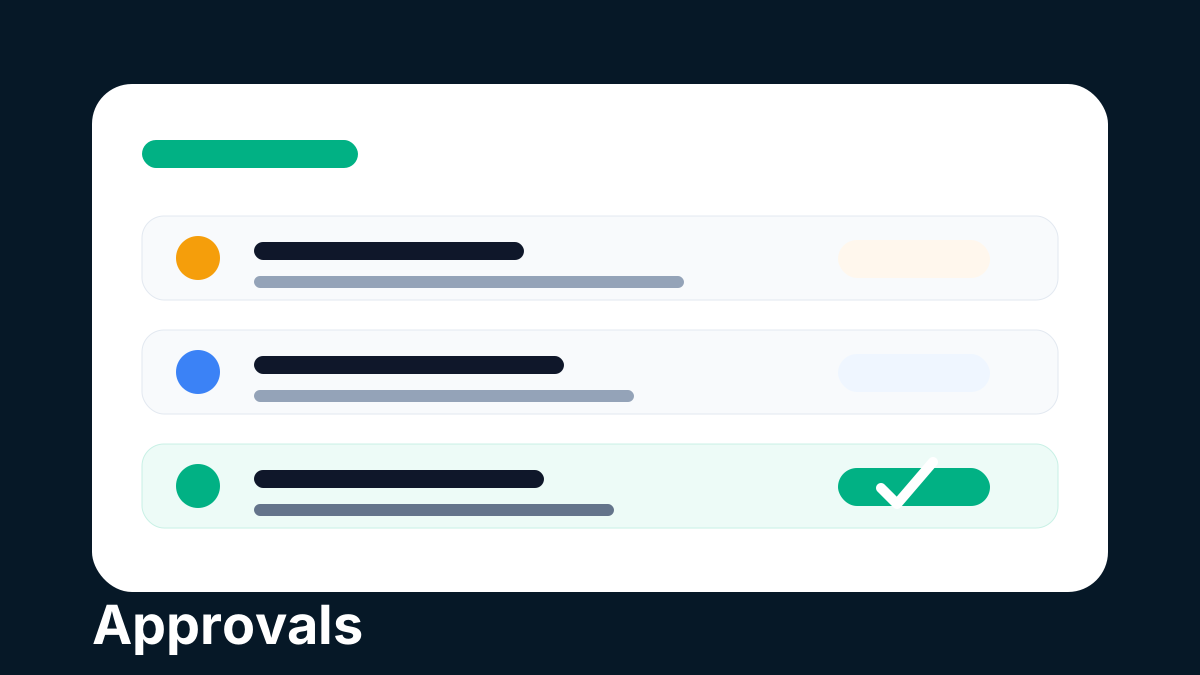
When AI prepares the work and a human approves the outcome, the business gets speed without losing control.
The system should ask good follow-up questions
Real messages are rarely perfect.
Someone writes, "tolong bayar invoice vendor kemarin" without an amount, due date, attachment, or vendor id. A useful AI assistant does not guess silently. It asks for the missing information, offers options when there is ambiguity, and pauses when the action would be risky.
That is a better operating model than both extremes: manual admin on one side, blind automation on the other.
Trust comes from traceability
Teams trust AI when they can see what happened.
The request, extracted fields, approval path, decision, and integration result should be visible. If something fails, the team should know where it failed and what to do next.
Human-in-the-loop AI is not slower. It is how automation becomes dependable enough for everyday work.